Julius Meinl
Julius Meinl Generations Programme
Contributing to the Future of Coffee Farming Communities
VP Group Strategies, Brand & Corporate Communication and 5th generation family member
Christina Meinl
“With a history of more than 160 years, Julius Meinl is a family-business built on generations of expertise and passion for coffee. Through the Generations Programme, we are committed to preserving and passing down the knowledge and traditions of coffee farming, aiming to support a viable, long-term future for selected farmers that make our coffee exceptional.”
Our Generations Programme in Colombia
In 2018, we partnered with the Louis Dreyfus Company (LDC) to launch the first project of the Generations Programme in Colombia, originally named the "Colombian Heritage Project". The focus was on agronomist training and providing coffee dryers to help participating farmers improve yields and income, making coffee farming more appealing to younger generations.
In 2023, the project entered its second phase, expanding to more farmers and focusing on soil health as a “generational legacy”. Through training in regenerative agricultural practices such as weed management and composting, the initiative aims to help participating farmers of the project improve organic soil matter and reduce their reliance on synthetic fertilisers, with the goal of supporting long-term soil fertility for future generations of coffee farmers and improving their average yields.
Our Generations Programme in Uganda
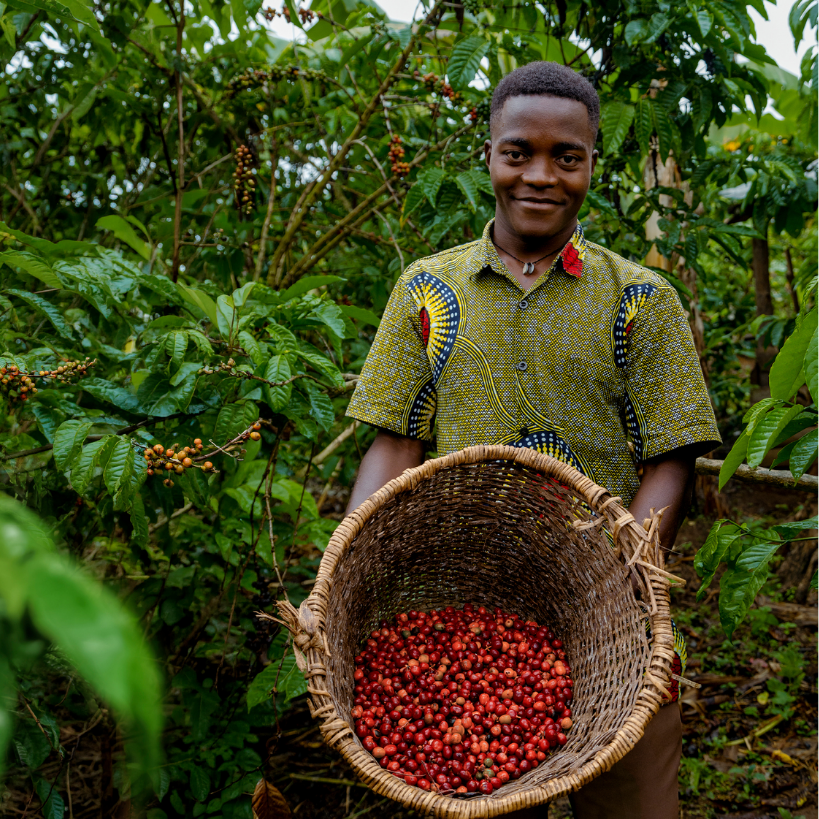
Launched in 2023, our Generations Programme in Uganda focuses on methods for improving participating farmers' livelihoods by equipping them with valuable income-generating skills and training in business management and marketing. Our efforts are designed to empower farmers to start their own microbusinesses, seeking to foster greater financial stability through income diversification.
The income-generating skills training includes bio-based pesticide and biochar production, sandal making, liquid soap production, and poultry farming. Beyond additional income, this training aims to help farmers reduce reliance on synthetic fertilizers, improve coffee yields, bean quality, and minimizing the operational environmental footprint. Building on this, a 2026 follow-up project scales successful components and expands mentoring support.
Hear from our farmers directly
Our Generations Programme in India
Our Generations Programme in India, running from 2025 to 2028, marks a new project aiming to empower selected young coffee farmers in Kerala and Karnataka to build viable and more resilient livelihoods. In collaboration with Fairtrade Austria and Fairtrade’s local network, the project offers training in farming best-practices, biodiversity, soil health, and digital tools for marketing and farm management.
By fostering intergenerational dialogue, through for example intergenerational workshops, and equipping youth with leadership and agribusiness skills, the programme is designed to help preserve the knowledge of older farmers while opening new opportunities for the next era of coffee farming. Alongside training, selected farmer cooperatives receive more robust coffee seedlings to replace aging plants, seeking to support productivity and help improve a farm's resiliency.
Our Generations Programme in Honduras
Launched in 2025, this four-year project of our Generations Programme in Honduras is designed to strengthen selected coffee farmers’ livelihoods, contribute to local ecosystem conservation efforts, and empower local organisations to take the lead in shaping lasting change in their communities. It supports around 4,000 smallholder families, impacts 6,000 hectares of coffee farming land, and engages 20 farmer organisations. The project is implemented by Hanns R. Neumann Stiftung (HRNS) Honduras and co-funded by several coffee roasters as a joint effort to improve long-term viability in the coffee sector in Honduras.
The project includes teaching participating farmers about agricultural tools, including soil and water conservation, coffee agroforestry, erosion control, microclimate monitoring, and household innovations like fuel-efficient stoves and water-saving devices. The aim is to support the transformation of vulnerable coffee landscapes, with a focus on communities located in buffer zones of protected areas, into biodiversity-friendly, resilient systems that seek to secure livelihoods and aid ecosystem recovery.
You may also be interested in
Our Responsibly Selected Coffee Initiative
Through our Responsibly Selected Coffee Initiative we purchase green coffee beans from farmers complying with sustainability schemes that align with the Global Coffee Platform’s Coffee Sustainability Reference Code.
Collaborating for the Future of Coffee
At Julius Meinl, we work to support more resilient coffee and tea supply chains by collaborating with a selected network of partners, including suppliers, NGOs, farmer organisations, roasters, community initiatives and public-sector stakeholders in coffee origin countries. These partnerships are designed to support targeted initiatives that contribute to positive developments in specific areas of the value chain where we are directly engaged, rather than representing full coverage of all supply chain actors or regions.
More information for B2B customers
If you are a business partner or B2B customer, you can find further information like our sustainability report, EcoVadis rating and policies here.